
Bridging Generational Gaps: meaningful connections that span across generations. These relationships bring remarkable health benefits, especially for seniors in assisted living in Golden, CO. Research reveals that connecting across age groups strengthens immune function, lowers inflammation and reduces risks of Alzheimer’s and depression.
The emotional rewards prove equally powerful—older adults who mentor younger people are three times more likely to describe their later years as happy ones.
Understanding Different Generations: Finding Common Ground
How generational experiences shape perspectives
Your formative years profoundly influence how you see the world around you. The major events, cultural movements and technological breakthroughs of your youth leave lasting impressions on your outlook. Baby Boomers grew up during the civil rights movement, Gen Xers witnessed the birth of the internet, Millennials weathered the Great Recession and Gen Z is coming of age during a pandemic and social media era.
Research confirms that age stands among the strongest predictors of different attitudes and behaviors. Your current life stage—whether you’re starting your career, raising children or enjoying retirement—combines with your generational experiences to create a unique perspective that colors your entire life journey.
Breaking down stereotypes across age groups
We’ve all encountered the tired clichés—Baby Boomers labeled as “selfish,” Millennials dismissed as “entitled,” and Gen Z criticized for lacking face-to-face communication skills. These stereotypes persist despite being largely untrue and ultimately harmful.
Studies reveal how these age-based generalizations create unnecessary divisions among us. These oversimplified views fail to account for complex factors shaping each generation’s reality, including wealth inequality, wage stagnation and shifting economic conditions.
Identifying shared values despite different upbringings
Beneath our apparent differences, remarkable similarities in fundamental values connect all generations. Researchers have identified eight universal work values that transcend age boundaries:
- Purpose – Feeling that what you do matters
- Respect – Being consulted and truly heard
- Belonging – Feeling connected and included
- Trust – Having confidence in one another
- Appreciation – Recognition for contributions
- Challenge – Opportunities to develop new skills
- Balance – Harmony between personal and professional life
- Compensation – Fair rewards for contributions
Focusing on these shared values creates genuine understanding for seniors in assisted living communities. Successful programs build upon these universal human needs rather than emphasizing differences.
Creating Meaningful Intergenerational Connections
Simple conversation starters that bridge age gaps
- Ask about historical moments: “What was happening in the world when you were my age?” This question opens windows into personal experiences within broader historical contexts.
- Seek practical wisdom: “What’s one skill you think everyone should learn?” Here, you acknowledge the value of life experience and accumulated knowledge.
- Share cultural touchpoints: “Could you tell me about your favorite music/movies from when you were younger?” This reveals both differences and unexpected similarities.
- Explore family history: “What traditions did your family have that you’ve carried forward?” This connects personal identity with wider generational patterns.
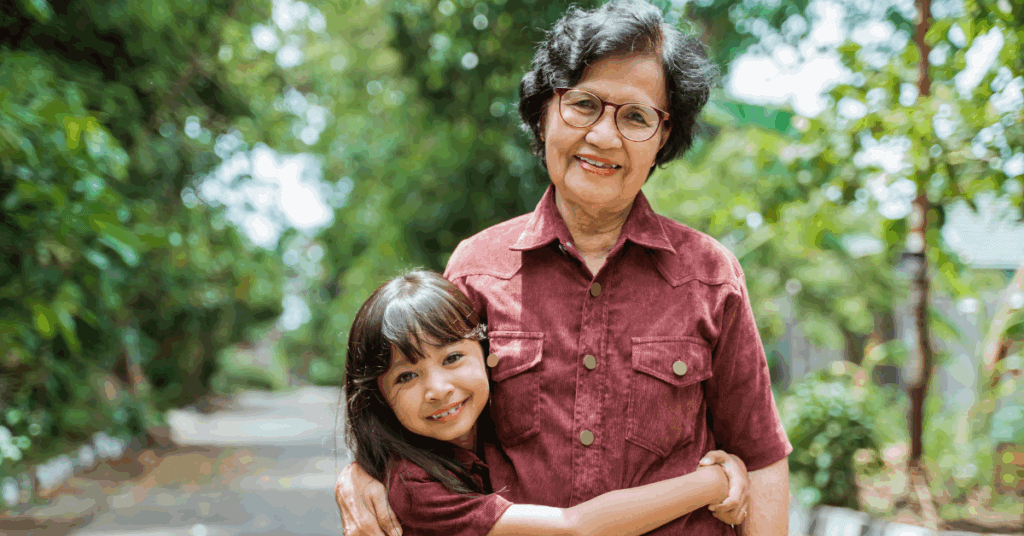
Shared activities that naturally bring generations together
- Skill-sharing workshops: where older adults teach crafts or cooking while younger people share technology skills. This two-way learning builds mutual respect.
- Storytelling circles: create environments where experiences and wisdom flow in both directions. These gatherings honor each person’s unique perspective regardless of age.
- Community service projects: unite different generations around a shared purpose. Working side-by-side toward common goals naturally bridges perspective differences.
- Nature activities: such as gardening or bird watching, create relaxed settings where conversation flows naturally alongside shared experiences.
Overcoming Challenges in Intergenerational Relationships
Communication differences and how to navigate them
To bridge these communication differences:
- Match the medium to the message – When discussing important matters, try using the other person’s preferred communication method rather than defaulting to your own
- Be explicit about expectations – Have honest conversations about response times and communication preferences early in your relationship
- Adapt your style – Remember that older adults may appreciate more formal exchanges, while younger generations often communicate in briefer, more casual ways
Finding a balance between teaching and learning
The most rewarding intergenerational relationships happen when both sides recognize they have valuable gifts to share. Older adults offer emotional wisdom and life experience, while younger people bring tech knowledge and fresh perspectives. To nurture this balance, create situations where both generations can take turns being the teacher and the student. This approach honors the reality that wisdom travels in both directions, deepening respect across age differences.
The Beauty of Connection
Connecting across generations brings beauty and meaning to lives on both sides of the age.
These shared values create natural bridges between us. For older adults, especially, these connections offer profound gifts—research shows they improve health outcomes and bring deeper happiness to later years. Would you like to discover how intergenerational relationships might enhance your life or bring joy to someone you love? Contact us at (720) 605-2111 to schedule a visit to Golden Lodge.
FAQs
Q1. What are some common challenges in intergenerational relationships?
Common challenges include differences in communication styles, varying expectations about pace and finding a balance between teaching and learning. Older generations may prefer face-to-face or phone communication, while younger ones might favor digital methods. Additionally, different generations may have distinct approaches to task completion and decision-making.
Q2. How can technology help in connecting different generations?
Technology can play a significant role in bridging generational gaps. Video calling enables regular connection between family members despite geographic distance. Digital storytelling tools allow older adults to record and share memories, creating lasting legacies. Collaborative games and social media groups centered around shared interests can also build unexpected friendships across generations.
Q3. What are some shared values across generations?
Despite varying life experiences, generations often share core values such as purpose, respect, belonging, trust, appreciation, challenge, balance and fair compensation. These universal values provide common ground for building relationships across age groups and can be the foundation for meaningful intergenerational connections.