

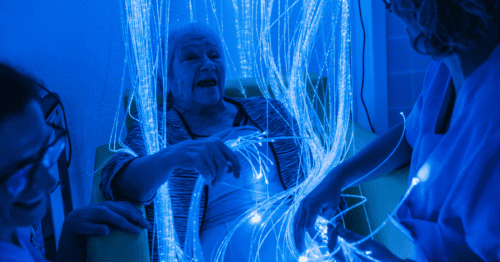
Memory care in Golden, CO, continues to evolve toward approaches like sensory stimulation rooms that honor both the neurological realities of dementia and the humanity of those experiencing it. Your family deserves access to care that goes beyond basic management to truly supportive environments.
The magic happens when all the sensory elements work together. Light, sound, texture, scent and gentle movement aren’t just random additions to a room—they’re carefully chosen to help a struggling brain find peace.
Specialized memory care in Golden, CO, is embracing sensory stimulation rooms to soothe the dementia brain. By utilizing “Snoezelen” principles—including circadian lighting, tactile textures and aromatherapy—these sanctuaries reduce sundowning and agitation. This evidence-based approach prioritizes resident dignity, fostering a peaceful environment where seniors can truly flourish and feel at home.
What’s the Best Lighting Setup For a Memory Care Room to Stop Someone From Getting Agitated at Night?
Lighting can make or break the evening hours for someone living with dementia. When shadows start falling, many residents experience that familiar wave of confusion and restlessness we call sundowning. You might think a simple dimmer switch would solve the problem, but the reality runs much deeper. Creating true evening peace requires understanding how different senses work together to either calm or overwhelm the mind.
The magic behind Snoezelen rooms
Picture a space where every element—from the gentle glow on the walls to the soft texture under your fingertips—works together to soothe an anxious mind. That’s exactly what Snoezelen rooms offer. The lighting approach here makes all the difference. Think warm, amber LED lights that can slowly dim as evening approaches, just like a natural sunset. These rooms say goodbye to harsh fluorescent lighting—those blue-tinted bulbs that trick the brain into staying alert when it should be winding down. Instead, soft amber nightlights create just enough visibility for movement without disrupting the body’s natural sleep signals.
How these spaces differ from typical activity rooms
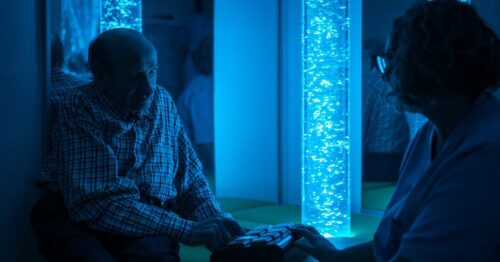
Traditional activity rooms focus on getting things done—group exercises, structured games and scheduled events. Sensory rooms take a different path entirely. They’re built around the idea that sometimes the environment itself can be the therapy.
Who finds the most relief in these environments?
Originally created for people with developmental disabilities, sensory rooms have found their true calling in memory care. Residents dealing with mid to late-stage dementia often respond beautifully because these environments speak directly to the senses without requiring complex thinking or verbal skills.
People experiencing sundowning syndrome particularly benefit from the controlled sensory input. When lighting, comfortable seating, touchable textures and gentle sounds all work together, the brain can process what it needs without feeling overwhelmed. Those who struggle with anxiety or become upset during routine care tasks often discover unexpected calm in these thoughtfully designed spaces.
Building Comfort: Essential Elements for Effective Sensory Spaces
Sensory rooms succeed when each element works together to create genuine comfort for residents with dementia. The goal isn’t perfection—it’s about understanding which environmental changes truly matter for the people you care about.
Lighting that actually helps
Good lighting makes the difference between a restful evening and hours of agitation. Research shows that blue-enriched light during daytime hours can decrease depression and agitation scores in dementia patients. Yet many memory care environments struggle with the evening transition. The solution lies in warmth. Amber lighting doesn’t fight against your loved one’s natural sleep patterns.
Textures that comfort
Touch remains powerful even when words fail. Soft fabrics—faux fur, sheepskin, weighted blankets—activate deep pressure points that naturally calm the nervous system. Consider what brought comfort before. Was it a favorite sweater? A particular fabric pattern? Sensory cushions and fidget blankets work best when they connect to something meaningful from the person’s history.
Sound and memory connection
Music reaches places that conversation cannot. Familiar songs, especially from young adult years, remain accessible even as other memory systems decline. Music therapy sessions help residents reconnect with emotions when verbal communication becomes difficult.
Scents that trigger positive memories
Essential oils work through both memory and physiology. Lavender, bergamot and lemon balm (Dementia UK, 2023) help reduce agitation, anxiety and other challenging symptoms. Research confirms these scents can trigger comforting memories while simultaneously calming the nervous system.
Why Sensory Rooms Matter for Your Loved One
Sensory stimulation rooms represent something we’ve needed in memory care for a long time—spaces that truly understand how dementia affects the brain. Rather than simply trying to manage difficult behaviors, these environments address what’s actually happening neurologically when your loved one turns agitated in the evening. Contact us at (720) 605-2111 today to learn more about our specialized approach to memory care at Golden Lodge and schedule a tour of our sensory-friendly community.
FAQs
Q1. What exactly is a sensory stimulation room for someone with dementia?
A sensory stimulation room is a calming, carefully designed space that engages the senses in a gentle way. It might include adjustable lighting, soft music or nature sounds, textured objects to touch and even soothing scents. The goal is to help reduce agitation, ease anxiety and create a sense of comfort.
Q2. Does lighting really make a difference for people with dementia in these rooms?
Yes, lighting can have a big impact. Warm, dimmable lights that mimic a sunset can help regulate sleep cycles and reduce “sundowning” symptoms in the evening. During the day, brighter or blue-enriched light may boost mood and alertness. Simple lighting adjustments can support both emotional balance and better rest.
Q3. How is a sensory room different from a regular activity room in memory care?
Unlike a typical activity room with scheduled programs, a sensory room is all about personalized, self-paced experiences. Instead of structured activities, it focuses on comfort and calming the nervous system through environmental elements like light, sound and touch. Residents can engage however they choose, which helps promote relaxation and a sense of control.